Imagine a world where your business processes are as smooth as a well-conducted orchestra, each note perfectly timed and harmonized. Welcome to the era of CRM software, where automation features are the maestros conducting your business symphony. These features are not just bells and whistles; they are the backbone of modern business efficiency, transforming potential chaos into seamless operations.
In this dynamic world, CRM automation is the secret weapon that empowers businesses to not just survive, but thrive. Whether it’s lead management, sales automation, or customer service, these powerful tools are redefining how companies interact with their customers. Let’s dive into this realm of innovation and explore how top CRM software is revolutionizing the way we do business, one automated feature at a time.
Overview of Automation Features in CRM Software
In today’s fast-paced business environment, automation is the key to efficiency and growth. The integration of automation features in CRM software has revolutionized the way businesses manage customer relationships, allowing them to streamline processes and focus on strategic goals.
Automation in CRM systems reduces the manual workload by automating repetitive tasks and processes. This not only saves time but also minimizes errors and ensures consistent communication with customers. By automating workflows, businesses can enhance productivity and drive better results.
Key Automation Features in Leading CRM Systems
Top CRM software solutions come equipped with a myriad of automation features designed to boost efficiency and enhance customer engagement. These features include:
- Email Automation: Automate follow-up emails and newsletters to ensure timely communication with customers.
- Lead Scoring: Automatically rank leads based on predefined criteria, allowing sales teams to prioritize high-potential customers.
- Task Assignment: Automatically assign tasks to team members based on skill sets and availability, ensuring a balanced workload.
- Sales Funnel Automation: Streamline the sales process by automating lead nurturing, qualification, and conversion steps.
- Reporting and Analytics: Generate automated reports to track performance metrics and gain insights into customer behavior.
The Impact of Automation on Business Processes
Implementing automation features in CRM software significantly transforms business operations. These features help in optimizing workflows, reducing operational costs, and improving customer satisfaction. By automating mundane tasks, businesses can refocus their efforts on strategic activities that drive growth.
“Automation isn’t just about efficiency; it’s about creating a foundation for innovation and transformation.”
Businesses leveraging CRM automation can respond to customer needs promptly, improve data accuracy, and achieve higher sales productivity. This leads to a more dynamic and responsive business model, paving the way for sustainable success.
Lead Management Automation
In the fast-paced world of sales, chasing leads can be like navigating a labyrinth. Automation in CRM software is the compass that guides businesses through this maze, ensuring no potential lead gets lost in the shuffle.
Through effective automation, CRM systems revolutionize lead management by streamlining lead scoring and nurturing processes. This enables sales teams to focus on what they do best—closing deals—while the software takes care of the heavy lifting.
Efficient Lead Scoring and Nurturing
Automation brings precision to lead scoring by analyzing behavioral data and demographics, allowing sales teams to prioritize high-quality leads. This means no more guesswork, just actionable insights that convert into sales. Moreover, nurturing these leads becomes a breeze, thanks to automation tools that send personalized content at the right time, building deeper connections and driving engagement.
With automation, CRM systems ensure that every lead is attended to promptly, improving response times, and increasing conversion rates. This is particularly valuable for businesses with large volumes of leads where manual tracking would be impractical and inefficient.
Top CRM Systems for Automated Lead Management
Discover how industry leaders leverage automation to transform lead management:
| CRM Name | Automation Feature | Benefits | Use Case |
|---|---|---|---|
| HubSpot | Automated Lead Scoring | Prioritizes leads based on engagement, improving sales efficiency | Perfect for marketing teams aiming to align efforts with sales |
| Salesforce | Lead Nurturing with AI | Increases conversion rates by sending personalized follow-ups | Ideal for enterprises needing detailed customer journey mapping |
| Zoho CRM | Behavioral Tracking | Identifies and engages potential customers through targeted content | Suitable for small to medium businesses looking for cost-effective solutions |
“Automation in CRM is about working smarter, not harder, opening the door to new levels of productivity.”
Sales Automation Capabilities
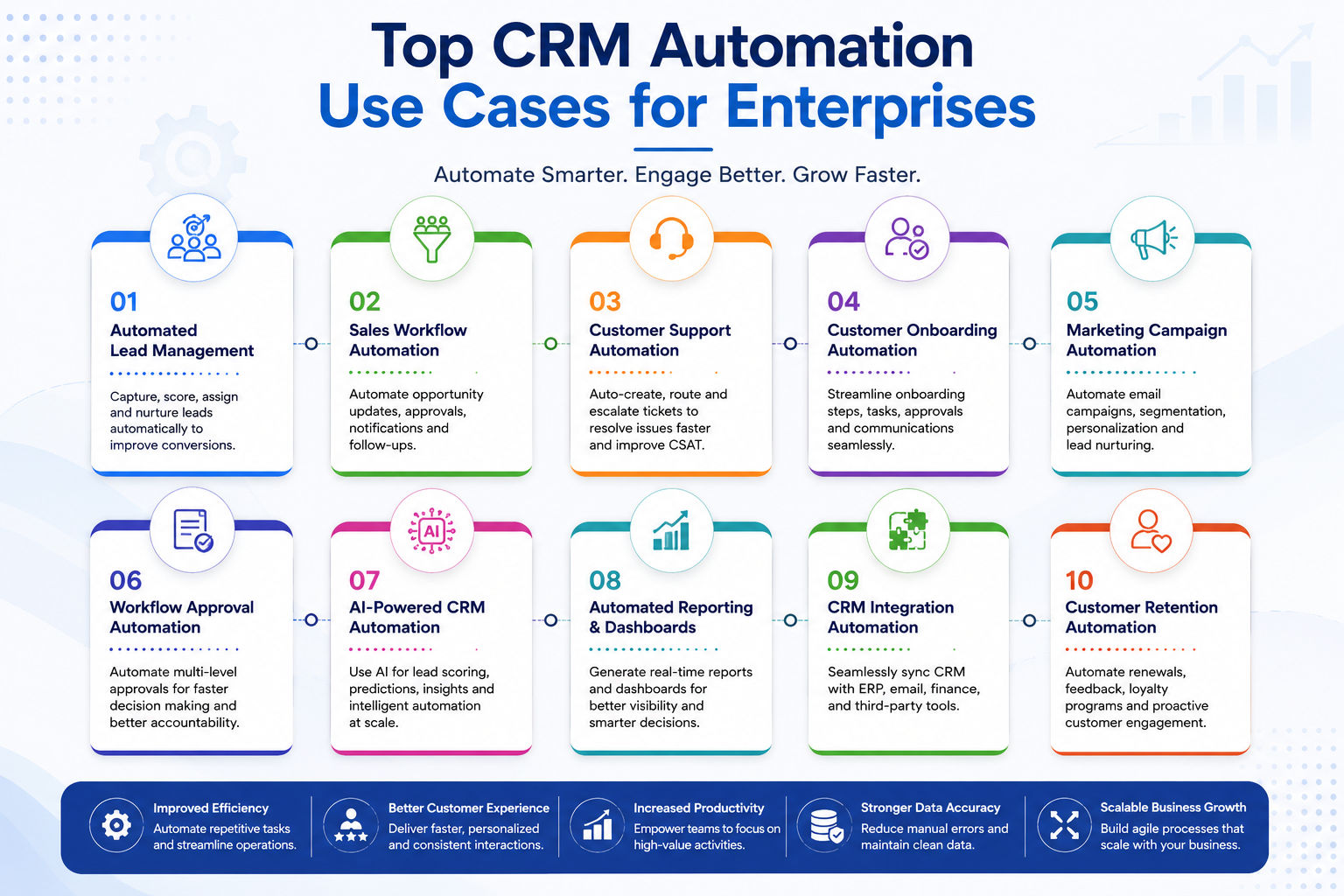
In the realm of CRM software, automation is not just a luxury—it’s a necessity that transforms sales processes. As businesses strive to stay competitive, leveraging sales automation capabilities is critical to streamline tasks and enhance productivity.
Sales automation in CRM software serves as the backbone for efficient and effective sales operations. By automating key aspects of the sales pipeline, businesses can optimize their workflows, improve customer interactions, and drive higher conversion rates. This automation encompasses various tasks, from capturing leads to managing follow-ups, ensuring that nothing falls through the cracks.
Automating Sales Pipelines and Follow-Ups
Imagine a world where every lead is nurtured with precision and every opportunity is maximized with minimal manual intervention. This is the power of automating sales pipelines and follow-ups. By implementing automated lead scoring, sales teams can prioritize prospects that are most likely to convert. Furthermore, CRM systems can trigger automated follow-up emails based on customer actions, ensuring timely engagement that resonates. Automation ensures that sales reps are always a step ahead, focusing on closing deals rather than chasing leads.
Incorporating sales automation tools, CRM systems like HubSpot, Salesforce, and Zoho CRM offer unique features. HubSpot excels with seamless integration of email automation, while Salesforce offers comprehensive pipeline visualization. Zoho CRM provides customizable workflows that adapt to specific business needs, showcasing the versatility of modern CRM solutions.
Comparing Sales Automation Features in Top CRM Solutions
When it comes to choosing the right CRM, understanding the sales automation capabilities is crucial. Here’s a comparison of some top solutions and their standout features:
| CRM Solution | Key Sales Automation Features |
|---|---|
| HubSpot CRM | Automated email sequences, lead nurturing, and task creation |
| Salesforce CRM | Lead scoring, AI-driven insights, and robust analytics |
| Zoho CRM | Customizable workflows, predictive sales analytics, and multichannel communication |
“Automation is the key to unlocking the full potential of your sales team.”
By understanding and leveraging these capabilities, businesses can ensure their sales processes are not only efficient but also highly effective in driving growth.
Customer Service Automation Tools
In the fast-paced world of customer relationship management, automation is the magic wand that transforms mundane customer service tasks into a seamless experience. CRM platforms now boast an array of automated tools designed to efficiently handle customer interactions.
These tools not only lighten the workload for support teams but also enhance the overall customer experience by providing quick and accurate responses. From intelligent chatbots to automated email responders, CRM systems are revolutionizing the way businesses engage with their clients.
Elevating Customer Experience with Intelligent Chatbots
Chatbots are no longer a novelty; they are a necessity. These digital assistants are embedded within CRM platforms to provide 24/7 support, answering queries and resolving issues with lightning speed. By leveraging natural language processing and machine learning, chatbots can understand and respond to complex customer inquiries, ensuring a personalized interaction every time. This level of service not only enhances customer satisfaction but also frees up human agents to focus on more complex tasks, ultimately driving efficiency.
Let’s delve into a comparison to showcase how different CRM software tools are harnessing the power of automation:
| CRM Software | Automation Tool | Integration Options | Customer Feedback |
|---|---|---|---|
| Salesforce | Einstein Bots | Slack, WhatsApp |
|
| HubSpot | Conversations | Facebook Messenger, Zapier |
|
| Zoho CRM | Zia Voice | Google Workspace, Microsoft Teams |
|
| Microsoft Dynamics 365 | Virtual Agent | LinkedIn, Azure AI |
|
Marketing Automation Integration
In the dynamic world of CRM software, marketing automation integration emerges as a game-changer, streamlining efforts and maximizing efficiency. Seamlessly connecting marketing tools with your CRM empowers businesses to elevate their strategies.
By blending marketing automation within CRM platforms, companies can harness data-driven insights to personalize customer experiences like never before. This integration ensures all customer interactions are tracked, analyzed, and leveraged, creating a holistic view that informs smarter marketing decisions.
Automating Email Marketing Campaigns
With marketing automation, email campaigns become more than scheduled messages—they transform into targeted, personalized experiences. By leveraging customer behavior data within the CRM, businesses can segment their audience effectively, ensuring the right message is delivered to the right person at the right time.
Methods to automate email marketing campaigns include setting up triggered emails based on customer actions, automating follow-ups, and utilizing drip campaigns that nurture leads over time. This strategic automation not only saves time but significantly increases engagement and conversion rates.
Marketing automation, when integrated with CRM systems, revolutionizes ROI by refining targeting and enhancing customer interaction, thus transforming potential leads into loyal advocates.
Analytics and Reporting Automation
In the fast-paced world of customer relationship management, data-driven decisions are crucial. Analytics and reporting automation in CRM systems is transforming how businesses digest and act on their data.
Automated reporting frees up valuable time, allowing teams to focus on strategic initiatives rather than data collection. This powerful feature offers insights in real-time, enabling agile responses to market changes and customer needs.
Unleashing the Power of Automated Reporting
Automated analytics in CRM software allows businesses to gather, process, and interpret vast amounts of data without manual intervention. Imagine having a virtual assistant that tirelessly compiles data, identifies trends, and crafts comprehensive reports with pinpoint accuracy. This means faster access to insights that fuel informed decision-making.
With minimal effort, businesses can visualize customer trends, track sales performance, and highlight areas for improvement. In turn, this not only boosts productivity but also enhances strategic planning and customer satisfaction.
Leading CRM Platforms with Robust Analytics Automation
Several CRM platforms stand out for their analytics automation capabilities, offering businesses a competitive edge:
- Salesforce Einstein Analytics: Leverages AI to provide deep insights, making it easier to anticipate customer needs.
- HubSpot: Offers advanced reporting tools that integrate seamlessly with marketing and sales efforts.
- Zoho CRM: Delivers powerful visual analytics, empowering teams to make data-driven decisions with confidence.
Influence of Automation on Decision-Making
Automated reporting reshapes decision-making by providing timely and precise data. Decision-makers are now equipped with a clear view of operational performance and market trends, allowing them to take strategic actions with conviction.
“Automation in analytics doesn’t just consolidate data; it clarifies the path forward.”
By eliminating the guesswork, businesses can realign resources, optimize processes, and ultimately drive growth. In essence, analytics and reporting automation is not merely a tool—it’s a strategic partner in achieving business excellence.
Final Summary
As we journey through the landscape of CRM software, it’s clear that automation isn’t just a convenience—it’s a revolution. These features are the unsung heroes that empower businesses to evolve, adapt, and excel in today’s competitive market. By embracing CRM automation, you’re not just streamlining processes; you’re unlocking potential, transforming customer relationships, and boosting your ROI. The future of business is here, and it’s automated. Are you ready to embrace it?